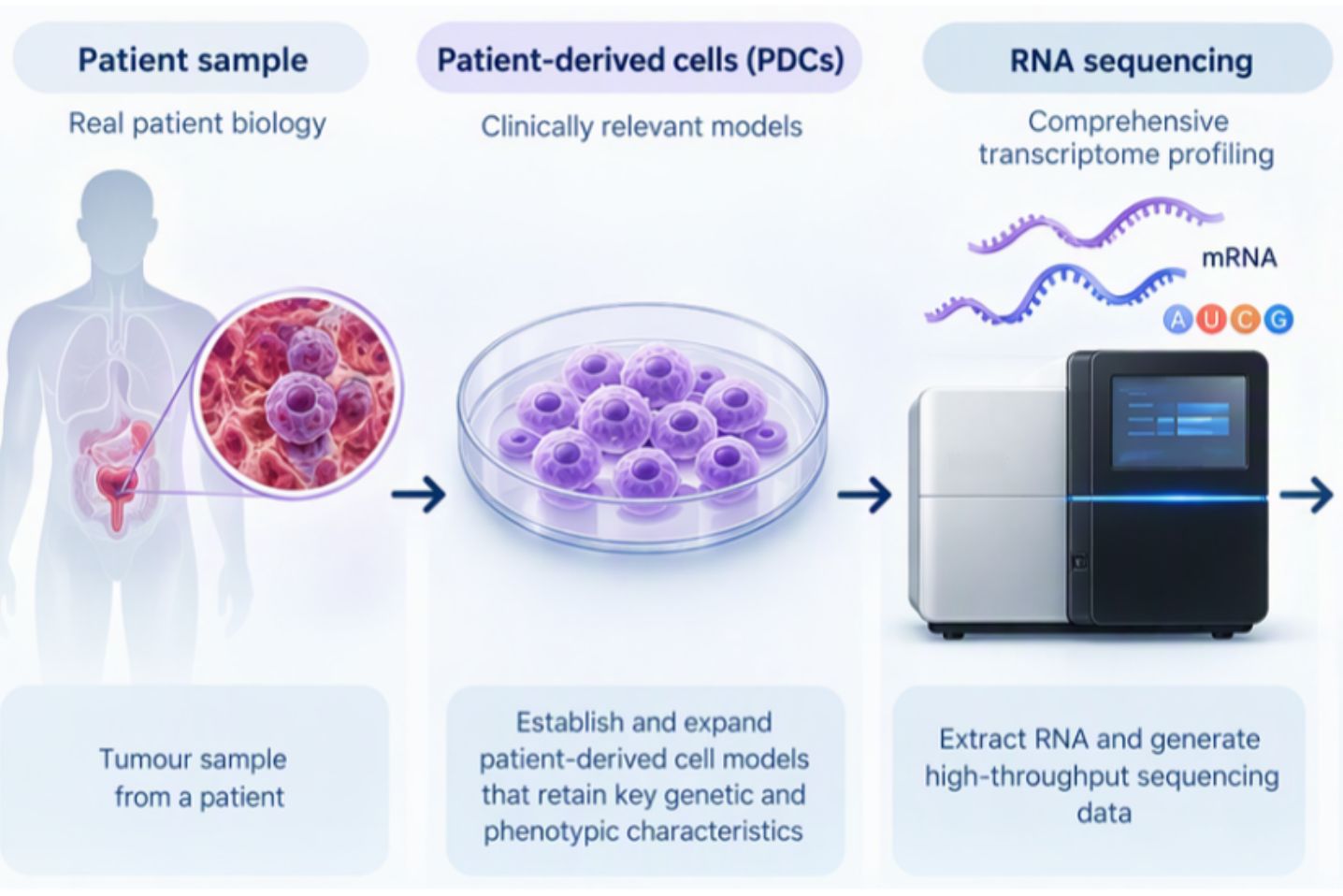
Understanding the molecular mechanisms that drive disease is essential for developing more effective therapies. While traditional in vitro models can provide valuable information, researchers are increasingly looking for models that better reflect patient biology and heterogeneity.
At Inaphaea, our patient-derived cell (PDC) models provide a clinically relevant platform for translational research. To support deeper characterisation of these models, RNA sequencing (RNA-Seq) data is available for select PDC samples, giving researchers access to comprehensive gene expression profiles that can help guide study design and accelerate discovery.
What is RNA sequencing?
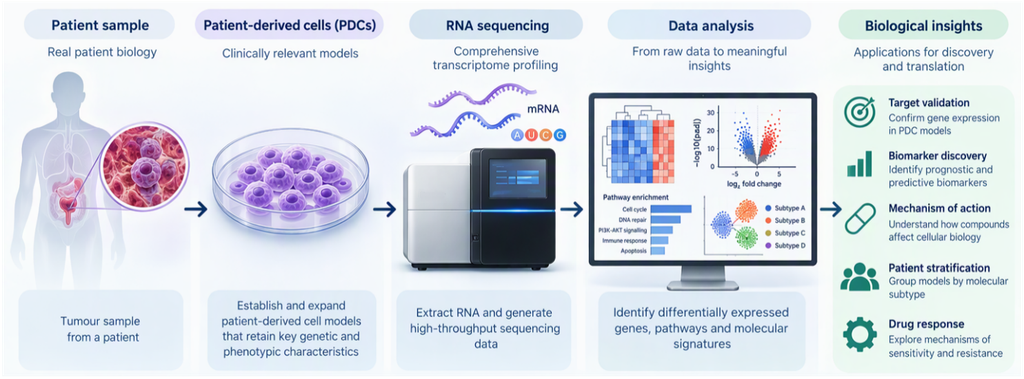
RNA sequencing is a powerful genomic technique used to analyse the complete transcriptome of a sample. By measuring RNA expression levels across thousands of genes simultaneously, RNA-Seq provides a detailed snapshot of cellular activity and biological pathways.
Unlike targeted gene expression assays, RNA-Seq offers an unbiased approach that can reveal:
- Differentially expressed genes
- Active biological pathways
- Disease-associated molecular signatures
- Potential therapeutic targets
- Biomarker candidates
- Mechanisms of drug response and resistance
This depth of information makes RNA-Seq an invaluable tool for both basic research and preclinical drug development.
Why combine RNA-seq with patient-derived cell models?
Patient-derived cells retain many of the genetic and phenotypic characteristics of the original patient tissue, making them a valuable model for studying disease biology.
By integrating RNA sequencing data with PDC models, researchers can:
- Select models based on specific gene expression profiles
- Investigate disease-relevant signalling pathways
- Stratify models according to molecular subtype
- Support biomarker discovery programmes
- Compare treatment responses across different patient-derived samples
- Identify potential mechanisms of sensitivity or resistance to therapeutics
This combination of functional biology and molecular characterisation enables more informed model selection and can improve confidence in experimental outcomes.
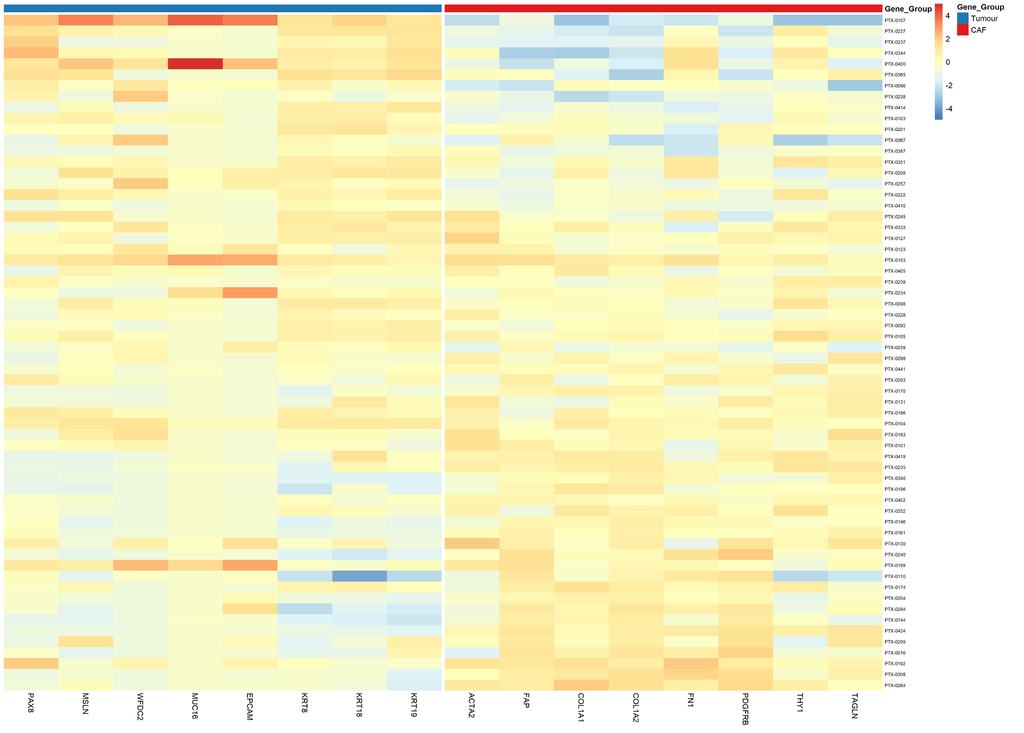
Figure 1. Example RNA sequencing heatmap showing expression patterns of cancer associated fibroblasts (CAF) and tumour-associated markers across ovarian patient-derived models in our cohort. Heatmaps enable visualisation of differential gene expression, supporting model selection, biomarker discovery and molecular stratification.
Applications across drug discovery and translational research
RNA-Seq datasets generated from PDC models can support a wide range of research applications, including:
- Target Validation
Researchers can confirm whether genes of interest are expressed within selected PDCs before initiating functional studies.
- Biomarker Discovery
Gene expression profiles can help identify biomarkers associated with disease progression, prognosis or therapeutic response.
- Mechanism of Action Studies
RNA-Seq data can provide an insight into the molecular pathways active within a model, and help researchers understand how experimental compounds affect cellular biology.
- Patient Stratification
Expression data can be used to group models with similar molecular characteristics, supporting studies that aim to understand variability in treatment response.
Supporting smarter model selection
Selecting the most appropriate disease model is a critical step in any research programme, and having access to RNA-Seq data alongside PDC models allows researchers to move beyond phenotypic observations and make decisions based on molecular biology.
At Inaphaea, RNA-Seq data available for selected PDC models provides an additional layer of characterisation that can help researchers identify the models best suited to their scientific objectives. Whether the goal is target validation, biomarker discovery, mechanism-of-action studies, or translational research, integrating transcriptomic data with clinically relevant patient-derived models can generate deeper biological insights and support more informed decision-making throughout the drug discovery process.

Interested in learning more about our patient-derived cell models and available RNA sequencing datasets? Contact the Inaphaea team at info@inaphaea.com to discuss your research requirements.