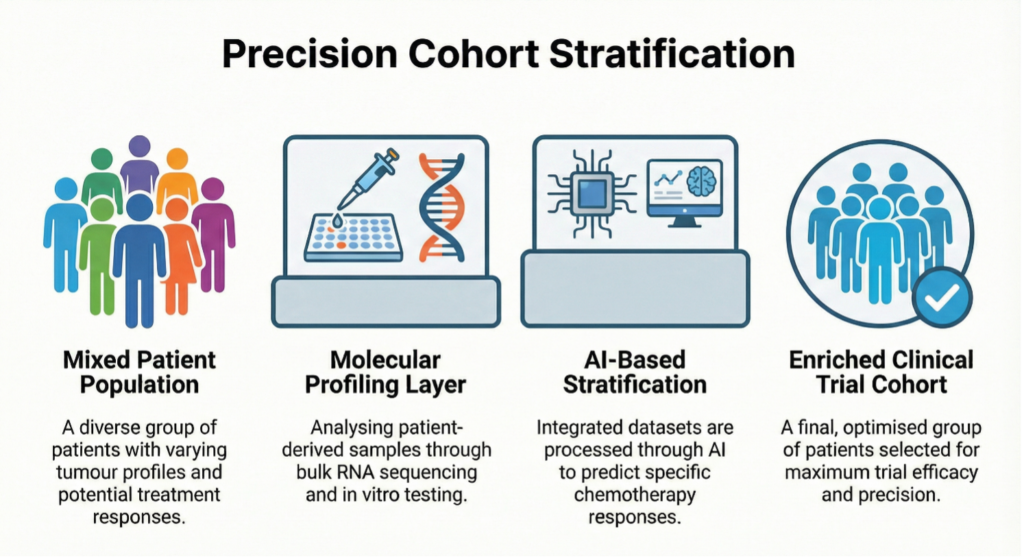
Artificial intelligence is transforming drug discovery at pace. From target identification to response prediction, AI is allowing us to interrogate biological data in ways that were not possible even a decade ago.
In oncology in particular, the opportunity is significant. Large-scale transcriptomic datasets, pathway-level analysis and predictive modelling are reshaping how we think about treatment response.
The next step is integration. The greatest advances will come from combining sophisticated AI approaches with clinically relevant patient derived systems that reflect real tumour biology.
At Inaphaea, that is exactly where we are focused.
How is AI used in drug discovery?
AI is increasingly applied to genomic and transcriptomic data to identify patterns associated with drug sensitivity, resistance mechanisms and pathway activation. In cancer research, this can mean linking RNA sequencing data to likely therapeutic response, identifying molecular subgroups or refining biomarker strategies.
As these computational tools become more advanced, the demand for high-quality, well-characterised training data is increasing. The predictive power of any model depends on how well the underlying data reflects real patient tumours.
This is where clinically relevant experimental systems become essential.
The value of patient derived cancer models
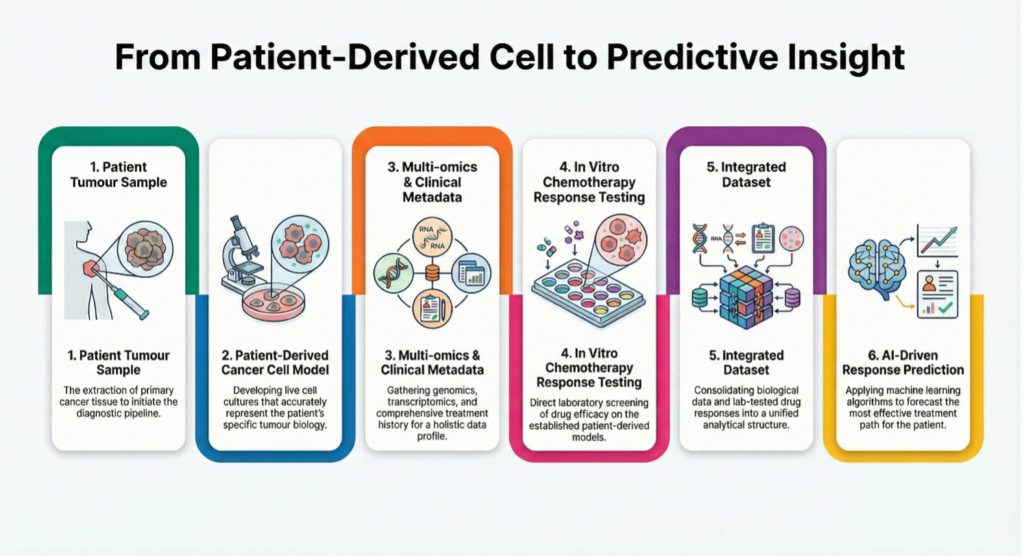
Inaphaea has built a bank of patient derived cancer cell models based on an acquired cohort supported by prospectively collected samples from several clinical partners. These models are linked to anonymised clinical metadata, including treatment history where available.
Unlike conventional immortalised cell lines, patient derived systems retain key aspects of tumour heterogeneity and disease biology as well as reflecting individual patient variability. They allow us to generate functional in vitro drug response data across a broad range of therapeutic modalities, including chemotherapy, targeted therapies, biologics and novel investigational compounds, alongside molecular profiling. This creates datasets that link genotype to phenotype in a clinically meaningful way.
This depth of characterisation provides a strong biological foundation for predictive modelling. It allows AI systems to identify potential response and resistance patterns using data that more closely reflects how tumours behave in patients, rather than relying solely on simplified laboratory systems.
Digitising ovarian cancer models through collaboration
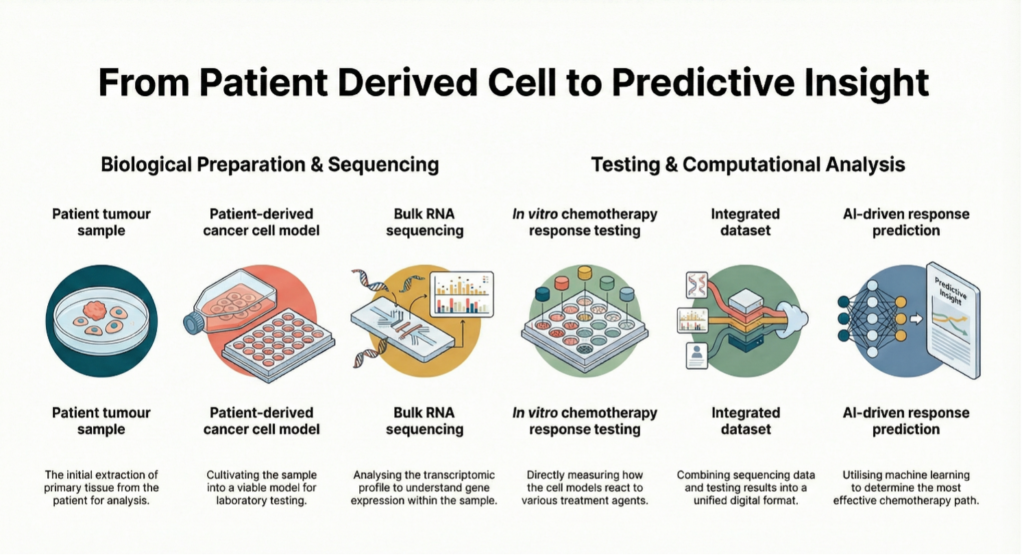
In collaboration with TwinEdge Bio, we have begun digitising a cohort of ovarian cancer patient derived cell models to bridge experimental biology and AI-driven prediction.
For this ovarian cohort, we generate bulk RNA sequencing data from our patient derived cancer cells. This is integrated with anonymised metadata, including treatment history. Alongside this, we produce in vitro response data across a panel of standard of care chemotherapeutic agents.
These datasets are then used to train predictive models focused on tumour injury and stress response pathways. By linking molecular profiles with functional response data, we can begin to identify signatures associated with treatment sensitivity or resistance.
This integrated approach brings together biology, clinical context and computation in a way that supports meaningful translational insight.
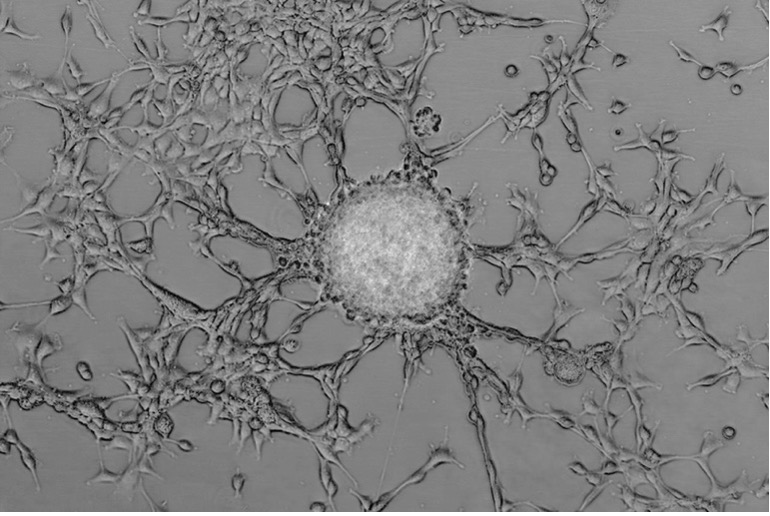
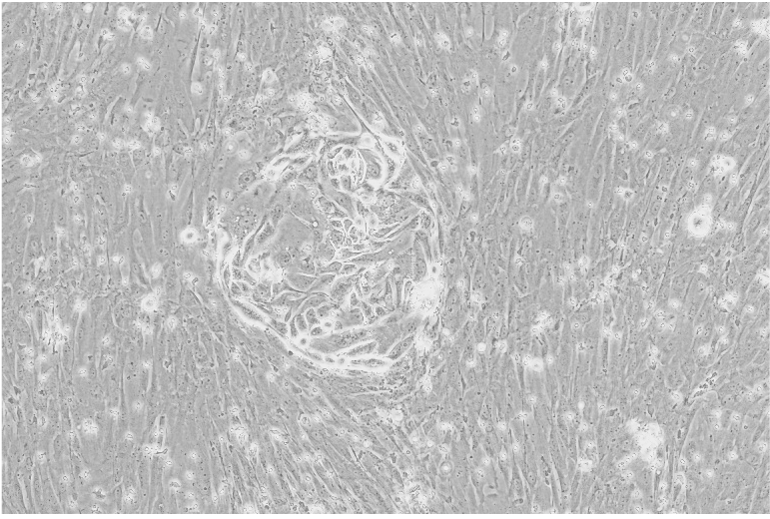
Figure 1. Ovarian patient derived cancer spheroid co-cultured with cancer-associated fibroblasts. Representative brightfield microscope image of a three-dimensional ovarian patient derived cancer spheroid co-cultured with cancer-associated fibroblasts. The central tumour spheroid is clearly defined, while surrounding fibroblasts display an elongated morphology and form an interconnected stromal network.
This model captures key aspects of the tumour microenvironment, including tumour stromal interactions that influence treatment response. By preserving these biologically relevant features, such systems provide more clinically aligned data for molecular profiling and functional drug response analysis, supporting the development of predictive AI-driven models.
The role of AI in cancer research and clinical translation
One of the most important challenges in oncology drug development is identifying the appropriate patient cohort for clinical trials. Many therapies show promise in early development but struggle in later-phase studies because the target population is not optimally defined.
AI offers a route to more informed patient stratification.
When predictive systems are trained using transcriptomic and proteomic data, clinically annotated metadata and experimentally derived drug response data, they can identify molecular signatures associated with response. These signatures can inform biomarker strategies, inclusion criteria and cohort enrichment.
Grounding these models in clinically relevant patient derived systems strengthens translational confidence. Using these systems generates data that can then be population-scaled in silico using patient avatars across a number of cancer indications to identify common response patterns using AI models. This population scaling also includes non-cancerous tissue avatars, enabling an understanding of therapeutic index. It increases the likelihood that signals observed preclinically will align with patient outcomes.
For us, the goal is clear. Improve the probability that the right therapy reaches the right patient population.